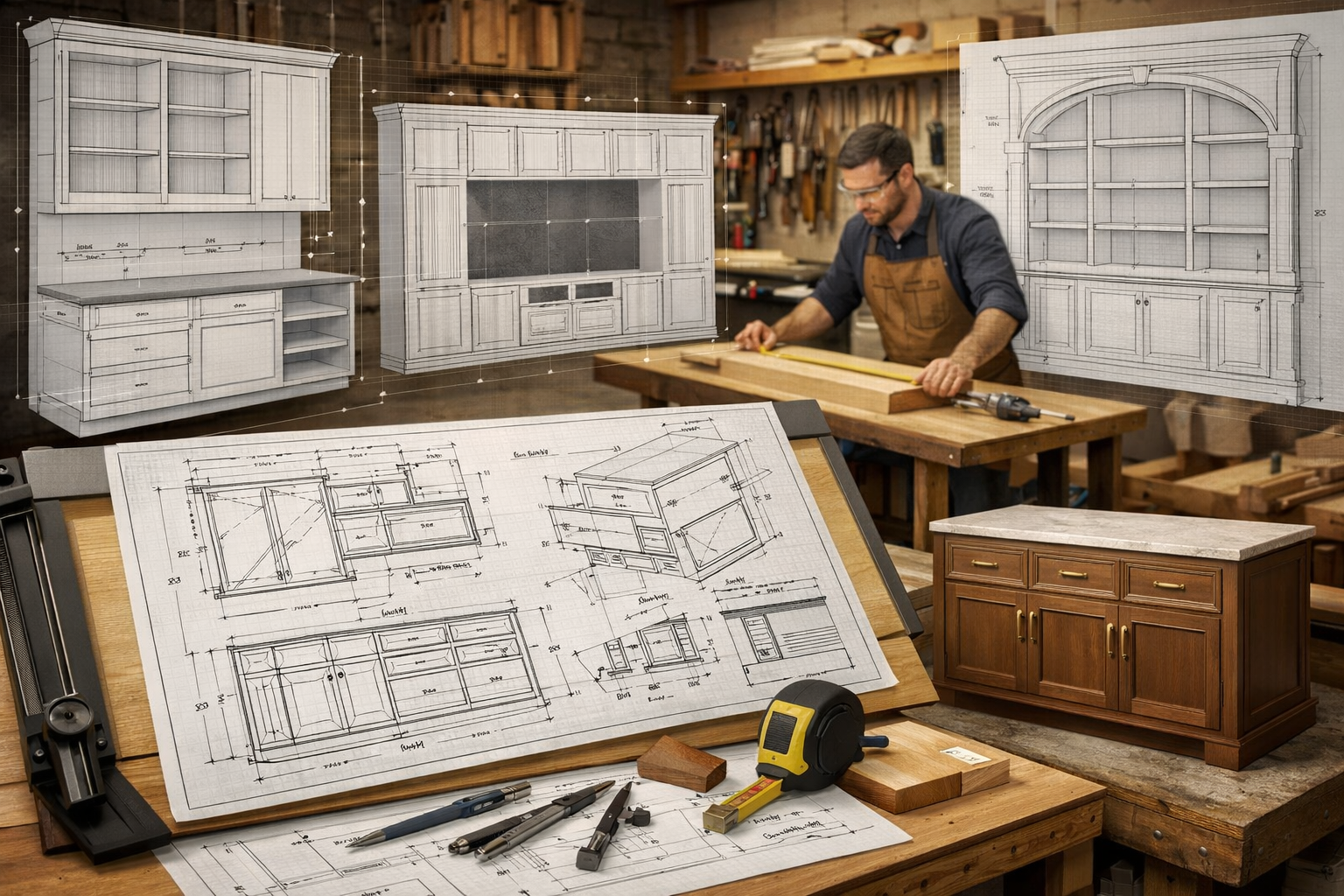
Why Are Millwork Shop Drawings Important for Custom Furniture and Interiors?
Custom furniture and interior projects are no longer just about aesthetics. In today’s highly competitive design and construction landscape especially across the USA and UK precision, coordination, and constructability matter just as much as creativity.
This is where millwork shop drawings become the backbone of successful custom interiors.
Whether it’s a bespoke kitchen, luxury retail fit-out, corporate workspace, or hospitality project, the difference between an idea that looks good on paper and one that performs flawlessly on site often comes down to the quality of millwork shop drawings services.
So, why exactly are millwork shop drawings so critical for custom furniture and interiors? Let’s explore the importance, trends, challenges, and opportunities shaping this essential part of the CAD design and drafting industry.
What Are Millwork Shop Drawings, and Why Do They Matter?
Millwork shop drawings are detailed technical drawings that translate design intent into build-ready instructions for manufacturers, fabricators, and installers.
Unlike conceptual design drawings, cad shop drawings provide:
- Exact dimensions and tolerances
- Material specifications
- Joinery and hardware details
- Assembly instructions
- Installation references
In custom furniture and interiors, even a few millimeters of error can result in costly rework or on-site clashes.
According to data from Autodesk & FMI, poor documentation and miscommunication contribute to up to 48% of construction rework globally, significantly impacting project timelines and budgets
(source: Autodesk construction productivity studies).
Millwork shop drawings exist to prevent those problems before they happen.
How Do Millwork Shop Drawings Bridge Design and Manufacturing?
One of the biggest challenges in custom interior projects is the gap between design vision and fabrication reality.
Architectural drawings often focus on form, layout, and aesthetics but they rarely answer fabrication-level questions like:
- How will this cabinet be assembled?
- What hardware supports this cantilevered shelf?
- How do panels align with MEP services on site?
This is where shop drawing services step in.
Millwork shop drawings act as a technical bridge, ensuring that:
- Designers’ concepts are manufacturable
- Fabricators clearly understand construction logic
- Installers have accurate on-site references
In the USA and UK markets, where prefabrication and off-site manufacturing are rapidly growing, this bridge is more important than ever.
Why Are Millwork Details Critical for Interior Design Accuracy?
When it comes to custom interiors, details define quality.
Millwork details interior design drawings capture every nuance that affects the final outcome, including:
- Edge profiles and finishes
- Grain direction and veneer matching
- Shadow gaps and reveals
- Hardware clearances
- Interface with walls, floors, and ceilings
Without these details, custom furniture often looks “almost right” but not premium.
A study by McKinsey & Company highlights that projects using detailed digital documentation experience 20–30% fewer coordination issues during execution. (source: McKinsey construction insights)
Millwork shop drawings ensure that what gets built matches what was envisioned down to the smallest detail.
How Do Millwork Shop Drawings Reduce Costly Errors and Rework?
Rework is one of the most expensive risks in custom furniture projects.
Common issues caused by missing or poor shop drawings include:
- Cabinets not fitting on site
- Conflicts with electrical or plumbing services
- Incorrect hardware placement
- Material waste due to incorrect cut sizes
High-quality millwork shop drawings services minimize these risks by:
- Resolving conflicts digitally before fabrication
- Coordinating with architectural, MEP, and structural drawings
- Standardizing production processes
According to FMI Research, rework can account for up to 5–10% of total project costs in interior fit-outs.
For business owners and developers, that’s money better spent on design improvements not corrections.
Why Are Millwork Shop Drawings Essential for Custom Furniture Manufacturing?
Custom furniture is rarely “standard.”
Each piece must align with:
- Space constraints
- User ergonomics
- Material behavior
- Load-bearing requirements
CAD shop drawings provide fabricators with:
- Accurate cutting lists
- Assembly sequences
- Hardware coordination
- Quality control checkpoints
In advanced manufacturing environments across the UK and USA, these drawings are often integrated with CNC machines, ensuring:
- Faster production cycles
- Reduced manual errors
- Consistent output quality
As digital fabrication grows, shop drawings are no longer optional—they’re foundational.
How Are Digital Trends Transforming Millwork Shop Drawings?
The CAD design and drafting industry is evolving rapidly, and millwork drawings are no exception.
Key trends shaping the industry include:
- 3D millwork modeling for better visualization and clash detection
- BIM-compatible shop drawings for coordinated workflows
- Parametric design for faster revisions
- Cloud collaboration between designers, fabricators, and contractors
According to Statista, the global CAD market is projected to exceed USD 13 billion by 2030, driven by construction and manufacturing demand.
In the USA and UK, clients increasingly expect millwork shop drawings to be data-rich, accurate, and revision-ready, not static 2D files.
What Challenges Do Firms Face Without Professional Shop Drawing Services?
Despite their importance, many projects still underestimate shop drawings.
Common challenges include:
- Incomplete design documentation
- Tight project timelines
- Lack of in-house drafting expertise
- Frequent design changes
Without specialized shop drawing services, teams often struggle with:
- Delayed approvals
- Misaligned expectations
- Fabrication bottlenecks
This is why many architecture and construction firms in the UK and USA are outsourcing millwork drafting to dedicated CAD specialists ensuring quality without overloading internal teams.
How Do Millwork Shop Drawings Support Faster Approvals and Compliance?
Approval delays can derail even the best projects.
Well-structured millwork shop drawings help streamline:
- Client approvals
- Architect and consultant reviews
- Contractor coordination
They clearly demonstrate:
- Compliance with design intent
- Alignment with building standards
- Constructability feasibility
In regulated markets like the UK and USA, this clarity reduces back-and-forth revisions and accelerates project timelines.
Why Are Millwork Shop Drawings a Strategic Advantage for Decision-Makers?
For business owners, developers, and tech decision-makers, millwork shop drawings are not just technical documents, they’re risk-management tools.
They provide:
- Cost predictability
- Schedule reliability
- Quality assurance
- Scalability for multi-location projects
As interior projects become more complex and customization becomes the norm, investing in professional millwork shop drawings services is no longer a luxury, it’s a competitive necessity.
What Opportunities Are Emerging in the Millwork CAD Industry?
The future of millwork drafting is full of opportunity:
- Integration with AI-assisted CAD tools
- Digital twins for interiors
- Sustainable material optimization
- Modular and prefabricated interior systems
Firms that embrace these advancements will deliver smarter, faster, and more precise custom furniture solutions.
Final Thoughts:
At their core, millwork shop drawings ensure that custom furniture and interiors are built right the first time.
They transform ideas into executable plans, reduce risk, and elevate quality especially in demanding markets like the USA and UK.
As projects grow more complex and expectations rise, partnering with an experienced CAD design team becomes increasingly valuable. Many businesses today collaborate with leading UK-based CAD design companies to ensure their millwork drawings meet global standards while staying flexible, accurate, and future-ready.
In custom interiors, success isn’t just about design, it’s about execution. And execution begins with precise millwork shop drawings.
FAQs
1. What are millwork shop drawings, and why are they important?
Millwork shop drawings are detailed CAD drawings that show exact dimensions, materials, joinery, and installation details for custom furniture and interiors. They are important because they reduce errors, ensure design accuracy, and help manufacturers and installers execute projects correctly the first time.
2. How do millwork shop drawings services improve custom furniture quality?
Professional millwork shop drawings services improve quality by providing precise fabrication details, accurate material specifications, and clear assembly instructions. This ensures custom furniture fits perfectly, functions correctly, and meets design expectations without costly rework.
3. What is the difference between design drawings and CAD shop drawings?
Design drawings focus on layout and visual intent, while CAD shop drawings focus on construction and fabrication details. Shop drawings include exact measurements, hardware placement, and manufacturing logic, making them essential for real-world execution.
4. Why are shop drawing services critical for interior projects in the USA and UK?
Shop drawing services are critical in the USA and UK due to strict quality standards, tight timelines, and high labor costs. Accurate shop drawings help avoid on-site errors, speed up approvals, and ensure compliance with project specifications and building standards.
5. How do millwork details support interior design accuracy?
Millwork details interior design drawings define finishes, edge profiles, tolerances, and interfaces with walls, ceilings, and services. These details ensure that custom interiors look polished, aligned, and professionally executed as intended by the designer.
6. Can millwork shop drawings reduce project costs and delays?
Yes, millwork shop drawings significantly reduce costs and delays by identifying design conflicts early, minimizing material waste, and preventing fabrication or installation mistakes. This leads to smoother workflows and more predictable project outcomes.
7. Who should use millwork shop drawings services?
Millwork shop drawings services are ideal for architects, interior designers, contractors, furniture manufacturers, developers, and business owners working on custom furniture or interior projects who need accuracy, coordination, and reliable execution.