Best ways to cook ube: from halaya to modern Aussie twists
Whether you’ve seen ube at a Filipino market, tasted it in a dessert shop, or spotted it on a trendy Instagram reel, one thing’s clear ube is stealing the spotlight. This vibrant purple yam isn’t just about looks. It carries a gentle sweetness and nutty aroma that begs to be experimented with. If you’re wondering how to actually cook ube in your Aussie kitchen, this guide lays it all out from boiling the root to baking it into rich cakes. Here’s how to truly bring out the best in this colourful, versatile ingredient.
How do you cook raw ube properly?
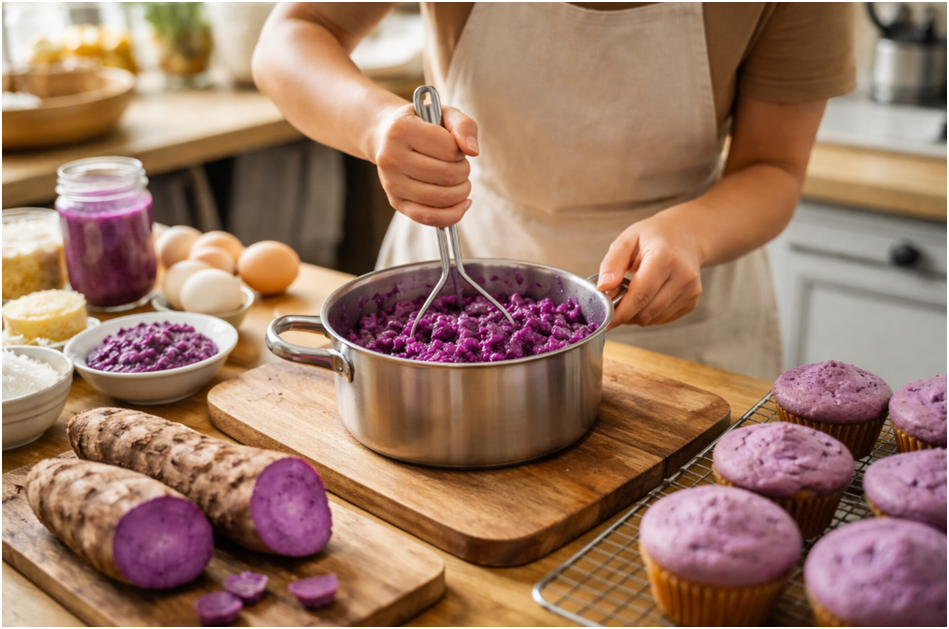
When you first get your hands on a raw ube root, it may look intimidating knobbly, fibrous, and rough. But underneath that rugged skin lies a naturally vibrant purple flesh, rich in flavour and colour. The first step in working with fresh ube is preparation. You’ll want to peel and boil the root until fork-tender, which usually takes 30–40 minutes depending on size. Make sure to handle it carefully, as the pigments can stain fingers and cutting boards.
Cooking ube isn’t complex, but it rewards attention. Unlike sweet potatoes, ube has a slightly drier texture. Once boiled, it should be mashed or grated for use in recipes like ube halaya a beloved Filipino dessert made by simmering mashed ube with condensed milk and butter until silky. Boiled ube becomes a soft, earthy canvas. From there, it can be sweetened, turned into jam, or even added to pancake batter or gnocchi. Its natural vibrancy means you won’t need artificial colours, making it both beautiful and clean.
What’s the difference between ube and taro?
One of the most common questions people ask when cooking ube is how it differs from taro. While both are tubers and have similar textures once cooked, they’re not the same and confusing them in recipes can lead to surprising results. Ube (Dioscorea alata) has a sweet, nutty profile. It leans more toward dessert recipes and turns a brilliant purple when cooked. Taro, on the other hand, has a more neutral, even slightly savoury, flavour and is usually white or speckled with light purple. Taro is often used in savoury Asian dishes and bubble tea pearls.
Cooking and pairing tips
If you’re after a vibrant, sweet experience think ube. Taro suits stews or soups better. Many Filipino desserts featuring ube would taste dull if replaced with taro. Conversely, using ube in savoury dishes calls for a balanced approach, mixing it with herbs, coconut milk, or spices to enhance complexity.
Which traditional Filipino dishes use ube?
Filipino cuisine has long embraced ube not just as a treat, but as a cultural staple. One iconic dish is ube halaya a thick jam made by stirring mashed ube with condensed milk, evaporated milk, and butter for up to an hour. It’s often served on its own or as a topping for halo-halo, a shaved ice dessert filled with tropical flavours. Another classic is ube puto, a steamed rice cake tinted and flavoured with ube puree. Served during celebrations, it blends chewy textures with subtle sweetness.
Other Filipino favourites
- ube pandesal
- ube leche flan
- ube bibingka
- ube macapuno cake
- ube ice cream
The beauty of these dishes lies in their simplicity they honour the flavour of ube without masking it. For Aussies keen on trying these at home, many ingredients are available in Asian grocery stores across Melbourne, Sydney, and Brisbane.
Can ube be used in modern Australian cooking?
Absolutely. In recent years, ube has crept into fusion kitchens and Aussie cafes. Its eye-catching colour and flexible taste profile make it ideal for both desserts and creative savoury pairings. Ube’s slightly nutty, vanilla-like taste plays well in buttery baked goods or even mashed into soft cheeses and spreads. One popular adaptation is the ube lamington a creative twist on the traditional Australian cake. Instead of chocolate icing, ube jam is used, providing a bold colour and subtle sweetness. Another is the ube pavlova, where ube purée adds depth to whipped cream layers. More daring cooks have added it to burger buns, pizza crusts, and pasta. While not traditional, these variations reflect the globalisation of flavours turning humble root vegetables into gourmet statements.
How do you store and preserve cooked ube?
Whether you’ve made too much halaya or just want to prep for the week, storing cooked ube is simple. Let it cool completely before sealing it in an airtight container. It keeps in the fridge for about five days, or you can freeze mashed or pureed ube for up to two months. Always label your containers and avoid reheating multiple times, which can dry it out. If you’ve used ube in a baked recipe (like bread or cake), storage will follow the rules of that recipe often in a cool, dry place or refrigerated depending on the ingredients.
Pro tip: batch prep
If you’re cooking fresh ube, consider boiling extra and freezing small portions. That way, you can quickly whip up pancakes, cheesecakes, or muffins during the week without repeating the prep process.
Your ube journey starts in your kitchen
Whether you’re exploring Filipino cuisine or just looking to colour your dishes naturally, ube is a versatile, healthy, and culturally rich ingredient. From halaya to lamingtons, it finds its place in both heritage and modern cooking. Try it steamed, mashed, or pureed, and let your palate guide the rest. Have you already cooked with ube? Let us know what you made and how it turned out!