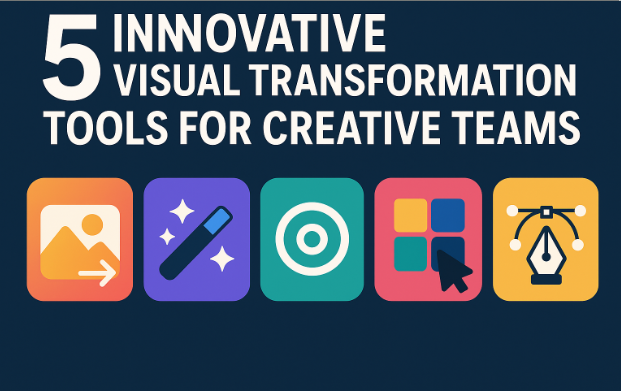
5 Innovative Visual Transformation Tools for Creative Teams
In today’s fast-evolving creative landscape, visual storytelling is no longer optional—it’s essential. Marketing teams, designers, and content creators rely on powerful software to transform raw ideas into polished visuals that captivate audiences. Whether it’s transforming text into dynamic videos, generating realistic visuals from prompts, or streamlining design collaboration, visual transformation tools have become indispensable to creative teams looking to accelerate content production and maintain brand consistency.
Among the many tools available, a few stand out for their innovation, accessibility, and ability to redefine the creative workflow. Below are five remarkable tools pushing the boundaries of visual transformation for modern creators.
1. Invideo
Invideo has quickly become one of the most advanced and user-friendly platforms in the visual creation ecosystem. Designed for both beginners and professionals, it allows users to turn any idea or script into an engaging video in minutes. Whether you’re creating marketing footage, explainer videos, or social-media content, its intuitive interface and vast template library make production effortless. Invideo’s text to video feature is particularly powerful—it automatically converts written content, such as blog posts or product descriptions, into high-quality videos complete with transitions, voiceovers, and animations. This drastically reduces manual editing time and enables teams to scale content efficiently while maintaining a professional finish.
The platform continues to evolve, offering AI-driven features that simplify every step of video creation. With its free ai video app, users can create visually stunning videos on the go, exploring an array of editing tools, stock footage options, and automated enhancements that add polish to every frame. The ability to collaborate within team workflows also sets invideo apart—creators can share drafts, get instant feedback, and apply brand styles across projects seamlessly. From short-form social clips to comprehensive presentations, invideo empowers creative teams to produce visually impressive content faster than ever before.
2. Canva
Canva remains a staple for design professionals and non-designers alike, thanks to its simple layout and vast library of templates, graphics, and typography. What makes Canva a standout is its collaborative functionality—team members can work in real time on brand assets, social media visuals, or marketing materials, ensuring design consistency across departments.
Beyond static graphics, Canva has expanded into video and animation tools, allowing creators to design motion content directly within the platform. With AI-powered design suggestions, automatic resizing for multiple platforms, and built-in brand kits, Canva is more than just a design tool—it’s a complete creative hub that helps teams maintain a unified visual identity while scaling their content output efficiently.
3. Runway ML
Runway ML has emerged as a go-to tool for content creators and production teams looking to integrate artificial intelligence into their creative processes. It merges machine learning with visual design, offering functionalities such as background removal, video inpainting, real-time object tracking, and even generative content creation.
What gives Runway ML its edge is its accessibility to both seasoned editors and beginners. You don’t need to know code to harness machine learning for video editing or visual effects. The platform’s cutting-edge capabilities empower teams to experiment with AI-assisted creativity—turning complex production workflows into automated, intuitive tasks that yield professional outcomes in less time.
4. Adobe Firefly
Adobe Firefly brings generative AI directly into Adobe’s creative suite, enabling users to generate detailed artwork, vector images, and design variations from written text prompts. It’s designed to blend seamlessly with tools like Photoshop and Illustrator, making it incredibly useful for professional designers who need to prototype ideas rapidly.
By allowing creators to describe their vision and see it rendered in real time, Firefly speeds up the iterative design process. Teams can experiment with style variations, texture overlays, and lighting adjustments—without starting from scratch. Because it integrates naturally into existing Adobe workflows, it supports both experimentation and efficiency, which are crucial for teams juggling multiple creative projects simultaneously.
5. Fotor
Fotor offers an impressive suite of tools tailored for designers who need professional-grade image editing without a steep learning curve. Known for its AI-powered capabilities, Fotor can automatically enhance images, remove backgrounds, and generate creative compositions based on textual inputs.
One of its standout features is its photo-to-art transformation tools, which can convert ordinary images into digital paintings, sketches, or cinematic visuals in seconds. Creative teams benefit from Fotor’s speed and simplicity, as it reduces the time spent on manual design adjustments while enabling consistent output quality for marketing visuals, branding, and content creation campaigns.
Conclusion
Creative teams today operate in an environment that demands both speed and originality. The right visual transformation tools not only enhance creative freedom but also streamline collaboration and consistency across projects. Invideo leads the charge with its AI-driven text to video technology and its versatile free ai video app, enabling creators to produce compelling visuals at scale. Complementing it are Canva’s collaborative design environment, Runway ML’s machine learning innovations, Adobe Firefly’s generative AI precision, and Fotor’s intuitive image enhancement capabilities.
Together, these tools represent the next generation of visual storytelling—where imagination meets intelligent automation. For creative professionals aiming to stay ahead, embracing these innovations is the key to transforming everyday ideas into extraordinary visual experiences.