Data Redundancy and Continuity: Why Managed Azure Services Are Vital for Resilient Operations
In the modern digital economy, data is the foundation upon which every successful enterprise is built. From real-time customer analytics to automated workflows and AI-driven insights, data powers every aspect of business decision-making. Yet, with the increasing volume and velocity of data, ensuring its continuous availability and protection has become a strategic imperative. Organizations cannot afford downtime, data loss, or operational disruptions, making data redundancy and continuity more critical than ever.
This is where microsoft azure cloud service play an essential role. By leveraging Microsoft’s cloud infrastructure, enterprises can achieve the highest levels of data reliability, redundancy, and recovery. Managed Azure providers bring technical expertise and proactive management that ensure seamless operations even in the face of unexpected failures or disasters.
The Importance of Data Redundancy in the Digital Era
Data redundancy refers to creating and maintaining multiple copies of critical data across different locations or systems. This redundancy is not mere duplication—it is a safeguard against data corruption, system failures, cyberattacks, and natural disasters. Businesses today generate enormous amounts of information daily, from transactional records to customer interactions. Losing even a fraction of this data can result in severe financial and reputational damage.
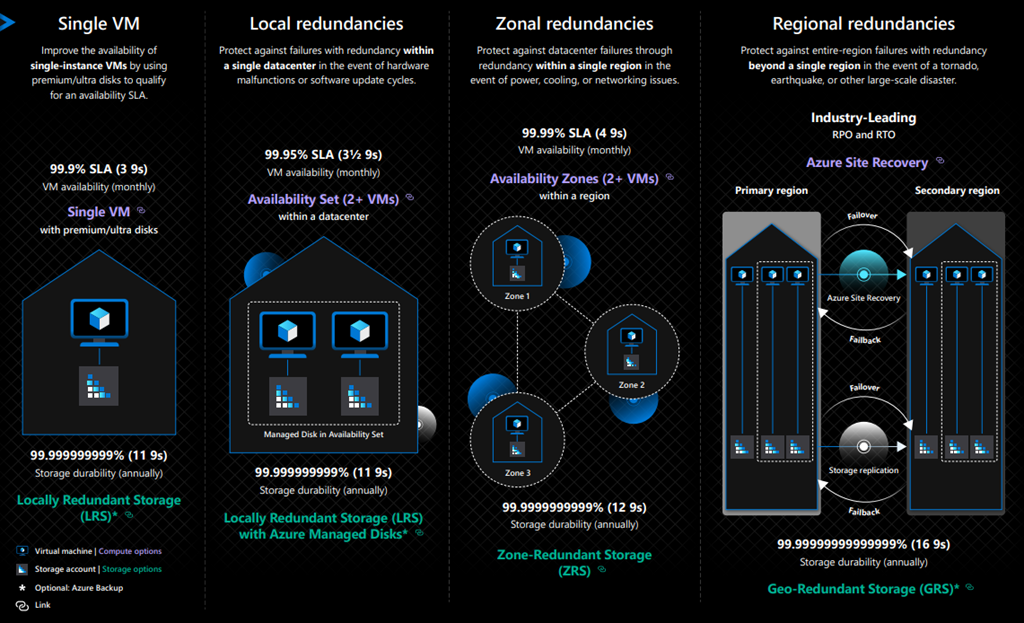
Managed Azure services offer built-in redundancy options that help maintain data availability under all circumstances. Microsoft Azure’s global network of data centers ensures that business information is replicated across regions, enabling high availability and swift recovery. Managed service providers (MSPs) take this a step further by designing tailored redundancy frameworks that align with an organization’s data sensitivity, compliance requirements, and operational goals.
For instance, Azure’s Geo-Redundant Storage (GRS) allows data to be stored in two different Azure regions hundreds of miles apart, ensuring that even if one region experiences an outage, the secondary region can instantly take over. Managed Azure providers continuously monitor these replication processes to confirm that data integrity is maintained and no single point of failure can disrupt the business.
Business Continuity: Ensuring Uninterrupted Operations
Business continuity extends beyond data protection—it encompasses the ability of an organization to maintain essential functions during and after a disruptive event. In today’s 24/7 business environment, downtime can cost thousands of dollars per minute and erode customer trust. Managed Azure services are designed to ensure continuity by combining proactive monitoring, automated recovery mechanisms, and robust disaster recovery solutions.
With managed Azure services, businesses gain access to Azure Site Recovery (ASR), which automatically replicates workloads running on physical servers or virtual machines to a secondary site. This means that in the event of an outage, applications can failover seamlessly, minimizing operational downtime. Managed Azure providers configure and maintain these environments, conducting regular failover testing and optimizing recovery time objectives (RTOs) and recovery point objectives (RPOs) based on business priorities.
Furthermore, managed Azure providers leverage Azure Backup to create encrypted, secure copies of business-critical data stored in multiple locations. They manage retention policies, compliance standards, and recovery drills, ensuring that organizations can restore systems within minutes rather than hours.
Business continuity through managed Azure services also extends to proactive planning. MSPs collaborate with organizations to assess risks, build contingency strategies, and ensure that every layer of IT infrastructure—from applications to databases—is resilient and redundant.
Cybersecurity and Data Protection Through Managed Azure Services
Data redundancy and continuity are incomplete without a strong cybersecurity framework. Managed Azure services integrate advanced security measures that protect data from cyber threats while ensuring its availability. Azure provides enterprise-grade protection with features such as encryption-at-rest, encryption-in-transit, multi-factor authentication, and role-based access control.
Managed Azure providers monitor these security layers around the clock using AI-driven threat detection and automated response systems. This real-time monitoring helps identify vulnerabilities before they escalate into breaches. In addition, they implement Zero Trust architecture, ensuring that every access request is authenticated and validated.
By combining data redundancy with security, managed Azure services create a resilient environment where data is not only backed up but also shielded from potential threats. This dual-layered protection ensures that even in the event of ransomware attacks or malicious activity, business continuity is preserved through secure and verified recovery points.
Enhancing Compliance and Governance
In industries such as finance, healthcare, and public services, data continuity and redundancy are often governed by strict compliance regulations. Managed Azure services help organizations adhere to these standards by providing auditable, policy-driven data management frameworks. Azure’s compliance certifications, including ISO 27001, GDPR, and HIPAA, provide a strong foundation, while managed providers tailor compliance strategies to meet regional and industry-specific mandates.
Through managed Azure dashboards and analytics, organizations gain visibility into data storage, backup frequency, and replication status. This transparency ensures accountability and simplifies audits, reducing the risk of penalties and non-compliance.
Cost Efficiency Through Managed Azure Redundancy Models
One of the key benefits of managed Azure services is cost optimization. Maintaining redundant data systems traditionally required massive capital investment in hardware, software, and maintenance teams. With Azure’s cloud model, these costs are significantly reduced through a pay-as-you-go structure.
Managed service providers optimize resource allocation by implementing tiered storage solutions—frequently accessed data resides in premium storage tiers, while archival or redundant copies are stored in cost-effective, long-term backup tiers. This balance ensures cost efficiency without compromising resilience.
Additionally, managed Azure providers use automation to eliminate manual backup errors, streamline operations, and reduce administrative overheads. The result is a resilient and cost-effective environment that guarantees continuity and scalability.
The Strategic Advantage of Managed Azure Partnerships
Partnering with a managed Azure provider transforms how organizations approach IT resilience. Instead of merely reacting to failures, businesses can adopt a proactive model where monitoring, alerting, and recovery are continuously managed by experts. These providers bring specialized skills, including network design, security configuration, and disaster recovery planning, that allow businesses to focus on innovation rather than infrastructure maintenance.
Moreover, managed Azure services enable scalability as enterprises grow. Whether expanding to new markets, onboarding new users, or integrating new applications, the cloud infrastructure can adjust dynamically without disrupting ongoing operations.
Top Service Providers for Managed Azure Services
Several companies have established themselves as trusted managed Azure providers, offering expertise in cloud operations, security, and business continuity. These service providers help enterprises design resilient systems tailored to their specific needs.
InTWO
InTWO is a globally recognized provider of managed Azure services, known for its deep expertise in cloud infrastructure, data protection, and digital transformation. The company offers comprehensive services that include Azure monitoring, backup, disaster recovery, and security management. InTWO’s approach emphasizes reliability and performance, ensuring that organizations achieve uninterrupted operations and full compliance with global standards. Their tailored solutions are ideal for businesses seeking end-to-end continuity and cost-effective data management.
Rackspace Technology
Rackspace Technology provides managed Azure services with a strong focus on hybrid and multi-cloud environments. Their expertise includes workload migration, cloud optimization, and 24/7 monitoring, ensuring operational resilience across diverse IT landscapes.
HCLTech
HCLTech delivers managed Azure services designed to improve business continuity and operational reliability. Their offerings include cloud-native application management, disaster recovery solutions, and AI-driven monitoring systems that enhance uptime and data protection.
Wipro
Wipro combines automation and analytics with managed Azure services to deliver scalable, secure, and compliant solutions for enterprises. Their expertise spans data redundancy, cloud optimization, and IT governance, ensuring seamless performance.
These providers demonstrate the strength of Microsoft’s managed ecosystem, helping businesses safeguard critical data and maintain resilient operations through Azure’s cloud infrastructure.
The Future of Business Resilience with Managed Azure Services
As organizations continue to rely on digital ecosystems, the importance of resilience, redundancy, and continuity will only increase. The future of managed Azure services lies in predictive operations, where AI and automation detect risks before they cause disruption. Intelligent redundancy models will automatically adjust based on workload demands, ensuring that resources are always available when needed most.
Managed Azure providers will continue to lead this transformation, combining technical expertise with strategic foresight. Their role will be central in enabling enterprises to achieve uninterrupted performance, sustainable growth, and long-term competitive advantage.
In conclusion, data redundancy and business continuity are not just operational priorities—they are the backbone of digital trust and resilience. Managed Azure services empower organizations to protect their most valuable asset—data—while ensuring continuous, efficient, and secure operations. By partnering with trusted Azure experts such as InTWO, businesses can future-proof their infrastructure, enhance reliability, and confidently navigate the challenges of a connected world.